
Pipistrellus Pipistrellus
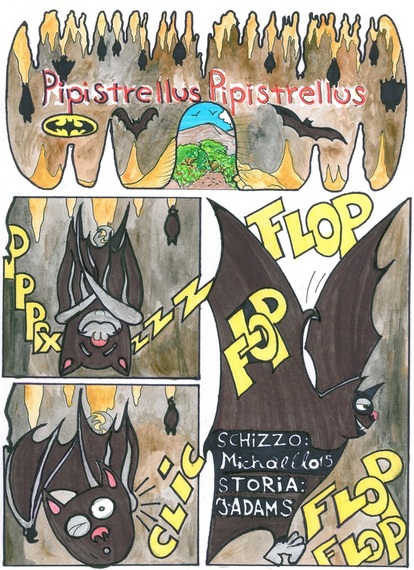
Pipistrellus Pipistrellus is a genus of bats belonging to the family Vespertilionidae and the subfamily Vespertilioninae. The genus name derives from the Italian word Pipistrello, meaning “bat” (from the Latin vespertilio, “evening bird, bat”).
They are distinguished from their much larger relatives, the Nyctalus bats, by their weak and undulating flight, which resembles that of a butterfly, although some species are more direct in their course.
Bat navigation!
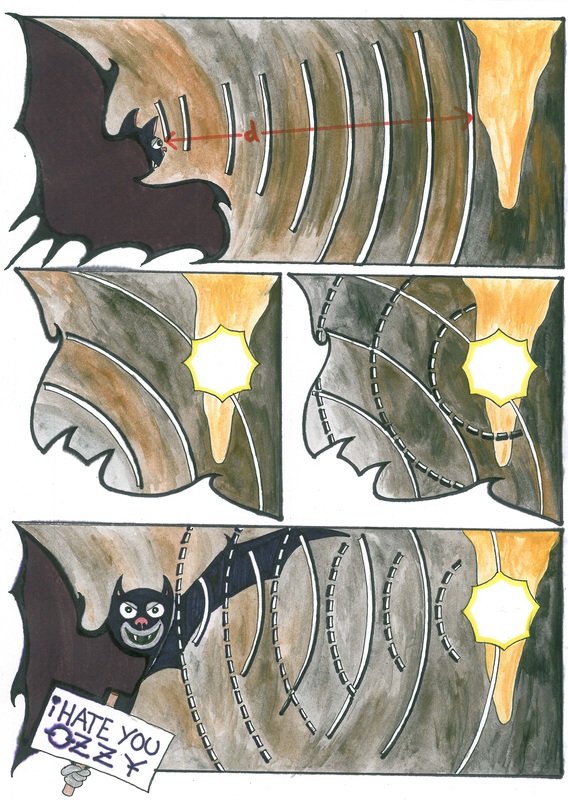
Bats use a type of SONAR (SOund Navigation And Ranging) to move around in the dark. They do not see very well and are active almost exclusively at night, which is why they must rely on other methods of “navigation” during flight besides vision. Bats send out sound signals into their environment, emitting 30,000–70,000 pulses per second, and receive the echoes back, thereby identifying what is around them. They are nocturnal creatures, mainly because it is easier to hunt insects at night, and also to avoid unfortunate encounters with their predators. They use their poor daytime vision during the day, but they do most of their “business” under the cover of night… 🙂
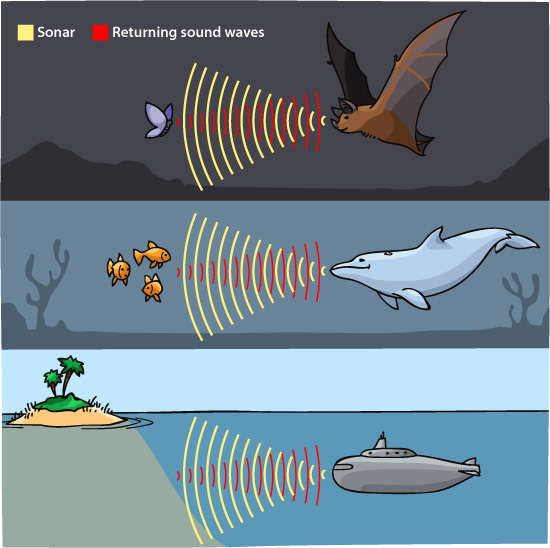
In nature, we find biosonar systems not only in bats but also in dolphins, which use them to perceive and explore their surroundings. In fact, a team of Spanish researchers recently demonstrated, for the first time in the world, that humans too can develop the ability to echolocate.
Pipistrellus
Exercise.
At some point during its nighttime flight, Pipistrellus detects a stalactite at a distance d. Given that the speed of sound is u_s = 340 m/s and that the time elapsed from the emission of the pulse to its reception by Pipistrellus is Δt = 1 ms, calculate the distance d.
7 incredible things you didn’t know about bats!
1. Bats are the only mammals capable of flight. They are exceptional in the air. Their wings are thin, and in aviation terms, we could describe them as “airfoils.”
2. A brown bat can catch 1,200 mosquito-sized insects in an hour! In Bracken Cave in Texas, USA, it has been estimated that the 20 million tailless Mexican free-tailed bats living there can eat 200 tons of insects… in a single night!
3. Vampire bats don’t drink blood. They just lick it. There are only 3 species of vampire bats worldwide. If you’re traveling in Central or South America, there’s a chance you’ll see a vampire bat bite a cow and lick the blood from the wound—but not suck it up!
4. Bats don’t have “fat days.” Their metabolism is enviable—they can digest bananas, mangoes, and berries in about 20 minutes!
5. Bats avoid humans. If you get bitten by a bat, go to the doctor, but don’t start making funeral arrangements—chances are you’ll be just fine!
6. The bat population makes up 1/4 of the world’s mammal population! Yes, you read that right! 1/4 of all mammals are bats. There are over 1,100 species of bats worldwide. Bats give birth to one baby each year. Most mammals, especially small ones, give birth to many more. Think of cats, rabbits, and mice.
7. Bats wash behind their ears. They spend far more time grooming themselves than even the most delicate and cleanliness-obsessed young teenage girls. They clean themselves and each other meticulously, licking and rubbing for hours…