Informal Learning
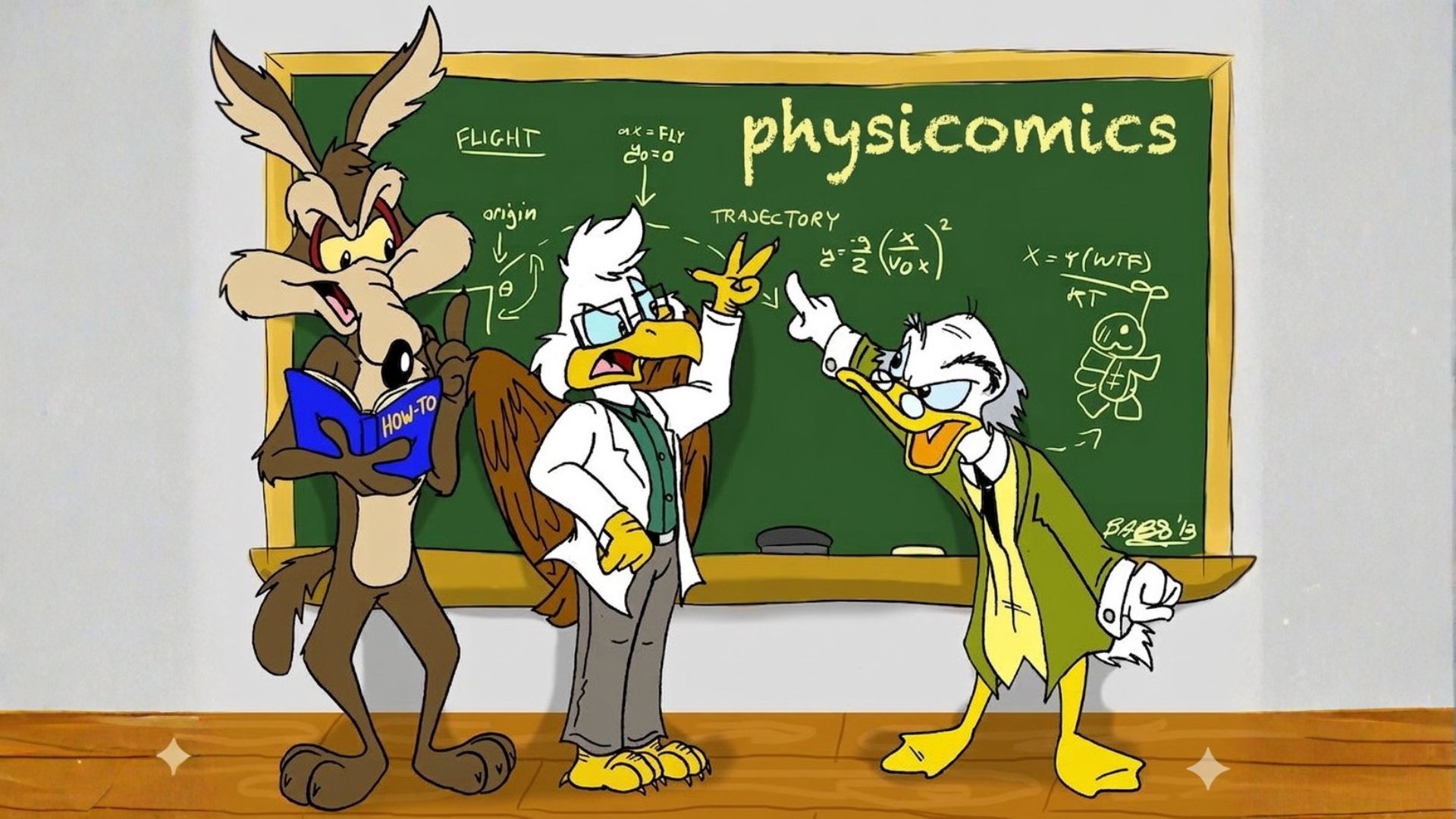
Informal learning is learning that arises from everyday activities related to work, family, or leisure and is not structured in terms of learning objectives, learning time, or instructional support, and therefore typically does not lead to formal certification. Examples of non-formal education include extracurricular books and popular science comics. From an educational perspective, comics are a universally understood language; they stimulate the senses, transform the abstract into the concrete, spark the imagination of adolescents, and are based on Paivio’s theory of dual coding (dual coding: Paivio, 1991): people store and decode information in two ways across two memory systems, language (verbal information) and images (nonverbal information). Therefore, images are more effective for learning when accompanied by text, and vice versa.
History of the use of comics in education
In the U.S., studies on their educational value have been conducted since the 1940s. Some scholars (F. Wertham, 1954) viewed them as an obstacle to education, and after the mid-1950s, interest in the issue of their educational value ceased. They were revived in 1970 for reluctant readers and as a defense against a new enemy, television. The situation changed in 1992 when Art Spiegelman’s graphic novel about the Holocaust won the Pulitzer Prize. Over the next decade, comics began to be used extensively in education. Some professors (R. Versaci, 2001; J. Kakalios, 2001) used them to teach Literature and Physics, respectively, at American universities. In the new millennium, experts consider them a draw for teenagers, especially for reluctant students (Bacon, 2002).
Comics in education! Why?
- Motivation-Engagement
They motivate: they serve as a motivator and increase individual participation, making learning very easy (Hutchinson, 1949).
They captivate: they exert a magnetic pull on children (Alongi, 1974)
- Supervision
Images and text jointly carry the narrative load.
Comics give a human face to a lesson—an emotional connection between students and the characters in a story.
- Permanence
A permanent visual element, in contrast to
- films and lectures: the medium or the speaker dictates the pace of the process
- books: a permanent element, but without images.
- Popularity
Children are familiar with popular culture
Acquisition of media literacy skills. -> “…so that students become consumers with a keen critical eye toward media messages” (Morrison, et al., 2002
“…there must be harmony between life activities and the school experience—new learning is a continuation or extension of the learning the student already possesses” Hutchinson (1949)